



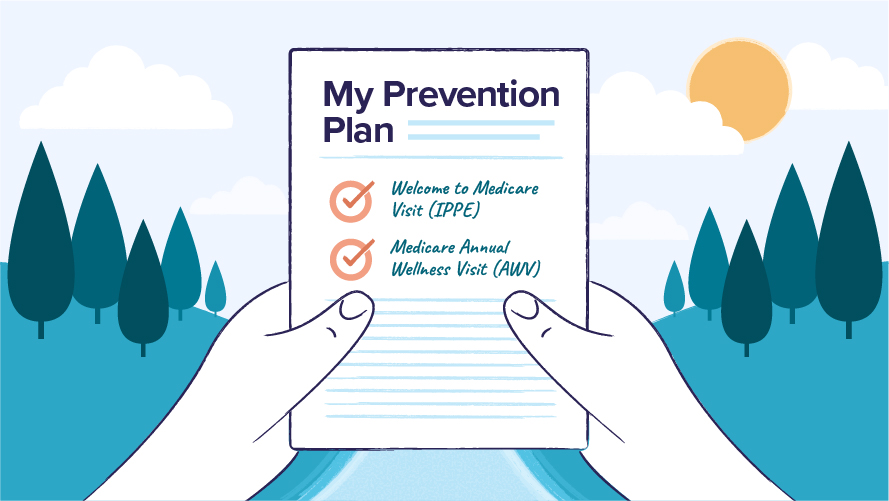
Because staying healthy should be simple—and covered.
Medicare preventive services help you stay health and avoid surprise bills. From screenings and vaccines to your Welcome to Medicare and Annual Wellness visits, these no-cost benefits catch issues early and keep your care on track—because prevention should be simple.
At a Glance • Preventive Care 101 • Costs • IPPE/AWV • Screenings • Vaccines • Counseling • Labs • Book & Prep • FAQs
At a Glance
📋 What you get: Dozens of no-cost preventive services (with most providers who accept Medicare assignment), including screenings, vaccines, counseling, and annual wellness planning.
📋 Why it matters: Catch risks early, avoid big bills later, and keep a dated Personalized Prevention Plan on track.
📋 Do this next: Book your your Welcome to Medicare (IPPE) or Annual Wellness Visit (AWV) and bring your meds list + doctor list + goals.
So you're new to Medicare and you've got your red, white, and blue Medicare card. It's sitting on your kitchen counter and you're staring at it thinking, "Okay...now what?"
Here's the thing nobody tells you until after you go down a Google rabbit hole: Medicare includes preventive services such as screenings, vaccines, and counseling sessions that are no-cost in most cases.
The catch? Almost nobody knows they exist. Or they know some exist but can't figure out which ones they need, when they can get them, or how to book the appointments without accidentally triggering a surprise bill.
That changes today. We're walking through Medicare's preventive services, including what they are, why they matter, and how to utilize them effectively without a scavenger hunt or a billing headache.
Preventive Care 101: What it is (and isn't)
Let's start simple. Preventive care is healthcare that prevents problems or detects them early, before they turn expensive, painful, or both. Think of it as the oil change for your body instead of waiting for the engine to seize on the highway.
Preventive care lives in two places:
- Original Medicare (Parts A and B): Your preventive services are covered under Part B (medical insurance).
- Medicare Advantage: You get a least the same preventive coverage as Original Medicare, often with additional plan benefits thrown in.
The key idea? Many of these services are no-cost, which means no copay, no coinsurance, no deductible when your provider accepts Medicare assignment and you meet the coverage rules.
❌ Here's what preventive care is NOT: Treatment for new symptoms or ongoing health problems. Walk into the doctor's office with chest pain? That's diagnostic care. Need an insulin adjustment for diabetes you're already managing? That's disease management. The line can blur (we'll explain how to avoid surprise bills in a minute), but the general rule: preventive services are proactive; diagnostic and treatment services are reactive.
Costs & Eligibility: The fine print without the headache
Most Medicare guides lose people in a forest of asterisks here. We're not doing that.
- For Original Medicare: Many preventive services are no-cost when you see a provider who accepts assignment and meets the coverage rules. "Accepts assignment" means your doctor agrees to be paid directly by Medicare and won't charge you more than Medicare allows. Most doctors accept assignment but confirm when you book. Just ask, "Do you accept Medicare assignment for preventive services?"
- For Medicare Advantage: Preventive services are usually no-cost in-network; stay in your plan's network and follow plan rules. Some plans require referrals for certain screenings; check your Evidence of Coverage (the rulebook) or call the number on your plan ID card.
When costs appear:
Even "free" preventive services can trigger bills if the visit veers into diagnostic territory. Examples:
- Routine colonoscopy that finds and removes a polyp? The removal isn't preventive anymore because it's the treatment. You'll pay a copay or coinsurance for that part.
- Book an Annual Wellness Visit, but also ask about that weird rash? Your doctor might code part of the visit as diagnostic, which could trigger a copay.
✅ The fix? Keep preventive visits focused on prevention. Schedule separate appointments for new symptoms.
📅 Timing rules: Most preventive services have frequency limits, such as once a year or every 24 months. Flu shot? Annual. Mammogram? Every 12 months starting at age 40. Bone density test? Every 24 months, if you're at risk. You prevention plan (coming up) will include a timeline, so you don't have to memorize this.
👉 Bottom line: Most preventive services are genuinely free if you follow the rules. And the rules aren't that complicated once you what they are.
Your Two Preventive "Home Bases"
If you're new to Medicare, two visits serve as your preventive care command centers: the Welcome to Medicare Visit (also called Initial Preventive Physical Exam, or IPPE) and the Annual Wellness Visit (AWV). These aren't physicals (more on that in a second), but they are your right move for mapping out a prevention strategy.
Welcome to Medicare Visit (IPPE): Your one-time onboarding appointment, available during your first 12 months of Part B coverage. Think of it as Medicare's orientation day. Your doctor will:
- Review your medical history and risk factors
- Check height, weight, and blood pressure
- Give you a simple vision test
- Talk about depression screening and advance care planning (those legal documents that spell out what you want if you can't speak for yourself)
- Hand you a baseline prevention plan: a checklist of screenings, vaccines, and counseling you should consider
Annual Wellness Visit (AWV): Your yearly prevention check-in, available once every 12 months after you've had Part B for at least a year. The AWV updates your prevention plan, reviews your medications, runs quick cognitive and depression screens, and flags anything overdue.
If you had a Welcome visit, your first AWV can't happen within 12 months of that initial appointment. But you don't need the Welcome visit to get an AWV. You can skip straight to wellness visits if you missed your IPPE window.
❌ What these visits are NOT:
Neither the IPPE nor the AWV is a full physical exam. They won't include pelvic exams, prostate checks, or listening to your heart and lungs (unless something specific comes up).
Want a traditional head-to-toe physical? Schedule that separately, and it probably won't be free, because Medicare doesn't cover routine physicals as preventive services.
This trips people up constantly, so: Medicare's preventive visits are about planning and screening, not comprehensive physical exams.
Try to sneak in problem-specific questions during your AWV ("Hey doc, while you're here, can you look at this mole?"), and your provider might code part of the visit as diagnostic. You could get a bill.
Best strategy? Keep IPPE and AWV appointments focused on prevention. Book separate appointments for new symptoms.
The Preventive Services List
Okay, let's dig into the actual services. This isn't a complete A-Z encyclopedia (you can find that on Medicare.gov), but it covers the most common preventive services with simple explanations of what they do and why they're worth your time.- Abdominal Aortic Aneurysm (AAA) ultrasound: One-time screening for men ages 65 to 70 who have smoked at least 100 cigarettes or anyone with a family history of the condition. Catches dangerous artery bulges before they rupture.
- Alcohol misuse screening: Annual screening if you use alcohol but aren't dependent. Up to four brief counseling sessions per year if your doctor determines you're misusing alcohol.
- Bone density test (DEXA): Every 24 months (or more if medically necessary) for people at risk of osteoporosis. Measure bone strength to prevent fractures.
- Breast cancer screening (mammogram): Annual screening mammogram if you're a woman 40 or older. One baseline mammogram if you're 35-39. Finds breast cancer early, when treatment works best.
- Cardiovascular disease risk management: Blood tests to check cholesterol and triglycerides once every five years. Catch high cholesterol early, make changes before serious problems develop.
- Cervical & vaginal cancer screening (Pap/HPV): Pap tests and pelvic exams once every 24 months in most cases, or once every 12 months if you're high-risk. Includes clinical breast exam. HPV testing once every five years if you're 30-65.
- Colorectal cancer screening: Starting at age 45, Medicare covers stool-based tests, colonoscopies, and CT colonography. Frequency depends on which test and your risk level. Colonoscopies let doctors remove precancerous polyps before they turn into cancer.
- Depression screening: One screening per year in primary care setting. Depression affects physical health and catching it early means you can get treatment before it impacts quality of life.
- Diabetes screening: If you're at risk (high blood pressure, abnormal cholesterol, obesity, or history of high blood sugar), up to two blood glucose tests per year. Find prediabetes or diabetes early, and control it before it damages eyes, kidneys, or nerves.
- Glaucoma screening: Once every 12 months if you're high-risk: diabetes, family history of glaucoma, African American and 50+, or Hispanic and 65+. Catches glaucoma before permanent vision damage.
- Hepatitis B screening: Covered if you're high-risk (diabetes, hemophilia, live with someone who has Hep B), or pregnant. Prevents liver damage, protects others.
- Hepatitis C screening: One-time screening if you were born between 1945 and 1965, or yearly if you're high-risk. Hep C is curable now, but only if you know you have it.
- HIV screening: Once per year if you're 15-65, or if you're younger/older and at increased risk. Up to three HIV screenings during pregnancy. Early detection means effective treatment and prevention of transmission.
- Lung cancer screening: Ages 50 to 77 with a 20 pack-year history (a pack-year is defined as smoking one pack of cigarettes per day for a year) and currently smoking or quit within the last 15 years qualify for an annual low-dose CT. Finding lung cancer early dramatically improves treatment outcomes.
- Prostate cancer screening (PSA): If you are over 50, discuss a PSA blood test and whether a digital rectal exam (DRE) is appropriate; DRE may have cost-sharing.
Vaccines
Vaccines prevent diseases that can be serious or deadly, especially as your immune system weakens with age. Medicare Part B covers several vaccines at no cost if your provider accepts assignment:
- Influenza (flu): Annual flu shot to reduce severe illness and hospitalization. Get it early in the flu season (fall through spring).
- COVID-19: All FDA-approved and authorized COVID-19 vaccines are covered. Booster timing varies based on CDC recommendations.
- Pneumococcal (PPSV23/PCV): Protects against pneumonia and bloodstream infections. Most people need 1-2 doses, depending on age and health.
- Hepatitis B: Covered if you're at medium or high risk for Hep B infection.
Note: Some vaccines, such as shingles (zoster), are covered under Part D. Advisory Committee on Immunization Practices (ACIP)-recommended vaccines are covered by Part D at no-cost, and you will usually get them at a pharmacy.
Counseling & Programs
- Advance care planning: Optional during IPPE or AWV. Time to document who speaks for you and what care you want if you can't makes decisions yourself. Not fun conversations, but important ones.
- Cardiovascular behavioral therapy: One session per year with your primary care doctor to discuss ways to lower heart disease risk, such as: aspirin use, blood pressure, diet, and exercise.
- Tobacco/nicotine cessation counseling: If you use tobacco, up to eight counseling sessions in a 12-month period to help you quit. Quitting smoking is one of the best things you can do for your health, even if you've smoked for decades.
- Intensive behavioral therapy for obesity: If you have a BMI of 30 or more, obesity screening and counseling sessions to help you lose weight through realistic diet and exercise changes.
- Diabetes prevention program: For people with prediabetes, a structured program with 16 weekly core sessions over six months, plus six monthly follow-ups. Teaches lasting behavior changes to prevent or delay type 2 diabetes.
- Diabetes self-management training (DSMT): If you've been diagnosed with diabetes, up to 10 hours of initial training (one hour of individual, nine hours of group) plus up to two hours of follow-up training each year. Learn to manage blood sugar, take meds, eat healthy, and reduce complications.
- Medical nutrition therapy: If you have diabetes or kidney disease (or had a kidney transplant in the last 36 months), nutrition counseling with registered dietician. Includes assessment, therapy sessions, and follow-up visits.
Labs & Imaging
Medicare covers certain lab tests and imaging when they're part of a covered preventive service:
- Cardiovascular blood tests: Lipid panels (cholesterol tests) are covered as part of cardiovascular disease risk assessment once every five years.
- Screening colonoscopy protocols: The colonoscopy is covered. If polyps are removed, copays or coinsurance apply to the removal because it is a treatment, not purely preventive.
- Other limited labs: Various blood and urine tests are covered when they're part of a specific preventive screening, like diabetes screening or prenatal care.
The key: These labs and imaging need to be ordered as part of a defined preventive service. If your doctor orders tests "just to check things out" without tying them to a specific preventive benefit, you might get a bill.
How to Book & Prep (step-by-step)
Ready to actually use these benefits? Here's how to book preventive appointments without confusion or surprise bills:
Step 1: Ask for the right visit type
Call and say, "I'd like to book a Welcome to Medicare visit" or "I need to schedule my Annual Wellness Visit." Don't say "physical" or "checkup." Those terms mean different things and might not be covered.
📞 Say this when you call: "Hi, I'd like to schedule my Annual Wellness Visit / Welcome to Medicare visit. Can you confirm this will be coded as a preventive visit with no copay?"
Step 2: Confirm network and assignment
One question can save you from surprise bills:
- Original Medicare: Ask, "Do you accept Medicare assignment?"
- Medicare Advantage: Ask, "Are you in-network for my plan?"
This one question can save you from surprise bills.
Step 3: Bring your information
Don't show up empty-handed. Bring:
- List of all medications (including over-the-counter drugs, vitamins, and supplements)
- List of your doctors and specialists
- Recent hospital or ER visits
- Your health goals
- Prior screening records (like date of last colonoscopy or mammogram)
Step 4: Clarify the scope
Want to include advance care planning? Mention it when you book so your doctor can allocate enough time. Have new symptoms to discuss? Schedule a separate appointment so you don't get billed.
Step 5: Leave with a plan
Walk out with a dated prevention checklist showing what screenings are due and when, plus any referrals you need. If you don't get this, ask for it. The checklist is your prevention roadmap.
Planning Checklist
My Preventive To-Do This Year
✅ Book IPPE (new to Part B) or AWV (annual check-in)
✅ Confirm provider is in-network (Medicare Advantage) or accepts assignment (Original Medicare or Medicare Supplement)
✅ Add vaccines and screenings needed to your calendar
✅ Bring meds list, providers list, and prior screening dates to appointment
✅ Ask for advance care planning time during the visit if needed
✅ Track frequency limits so you don't miss windows
✅ Keep preventive visits separate from problem-focused visits
FAQs
Are the IPPE and AWV the same as a physical exam?
No. These visits are about prevention planning and screening, not comprehensive physical exams. Want a traditional top-to-bottom physical? Schedule that separately and remember—it probably won't be free.
Why did I get a bill after my "free" preventive visit?
Extra tests or problem-focused care can add costs. If you went in for a wellness visit but also asked about a specific symptom, your doctor might've coded part of the visit as diagnostic. Keep preventive visits focused on prevention. Schedule separate appointments for new concerns.
Are all vaccines no-cost?
Not quite. Many vaccines are no-cost under Part B, but some (like shingles) are covered under Part D. That means they come from a pharmacy, and the cost depends on your drug plan. Check your plan's formulary to see which tier they're covered on and at what cost.
How often can I get screenings?
Varies by test. Most have frequency limits: annual, every two years, every five years, or once in your lifetime. Your prevention plan will list due dates for your specific situation.
Do I need a primary care doctor (PCP)?
You're not required to have one with Original Medicare or Medicare Supplement, but it's strongly recommended. Your PCP is your "quarterback" for preventive care: coordinates screenings, track referrals, and make sure results get followed up. Without a PCP, you're more likely to miss screenings or fall through the cracks. Find an in-network PCP using our Provider Directory Guide.
What if I have a Medicare Advantage plan?
You still get all the preventive services Original Medicare covers, and possibly more. But you may be required to have a PCP, so make sure you stay in-network and follow your plan's rules for referrals and prior authorization.
Your Next Step: Make the Most of Your Medicare Preventive Benefits
Understanding your Medicare preventive benefits isn't just about avoiding surprise bills—it's about taking full advantage of care that keeps you healthier, longer. From your Welcome to Medicare Visit to your Annual Wellness Visit, every screening, vaccine, and check-in helps you catch risks early and stay in control of your health. The best part? You've already earned these benefits. All you need to do is use them.
So grab your calendar, call your doctor, and book that wellness visit.
Ready to make sense of Medicare—without the scavenger hunt?
MyALEXHealth™ turns confusing coverage details into clear, step-by-step answers. Explore benefits, compare plans, and feel confident about every health decision you make.
For more details on specific preventive services, download Medicare's official guide (PDF) or visit the NCOA's preventive services overview.